Overview
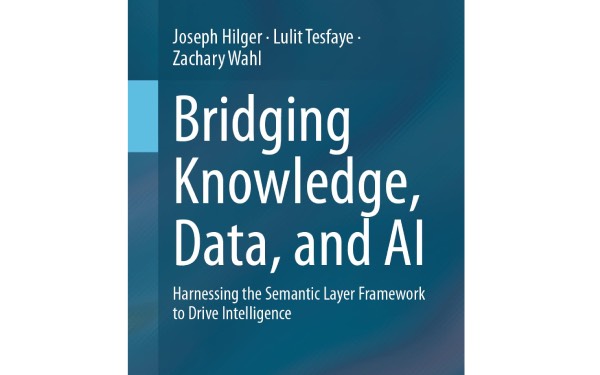
For June’s book of the month, we’re looking at Bridging Knowledge, Data, and AI by Lulit Tesfaye, Zachary Wahl, and Joseph Hilger. This brand-new book is bringing light to implementing and getting value from semantic layers.
The authors have put together a resource for folks implementing or fixing an existing semantic layer and really driving home the nature of building knowledge graphs. It is positioned as being a critical component to the success of AI models, alongside many other business initiatives. Throughout the book, and especially at the end, the authors describe a lot of case studies, showing specific successes and implementations in many different verticals. This really ties the learnings in this book together, making it a valuable resource for people planning semantic layer initiatives or implementing knowledge graphs. If that’s you or sounds like you, then this book is for you.
Applied Data Governance Practitioner Certification
Validate your expertise and take your career to the next level.

Early in the book, the reader is treated with the importance of setting up ontologies and managing different types of knowledge – from structured content all the way to knowledge trapped in employees’ minds screaming to be let free. The value in being able to understand, model, and ultimately distribute knowledge is impressed upon the learner. Even in this section, the authors are a bit technical, getting into specifics about SPARQL, for example. This is ultimately a valuable exercise, though, as it gives a thorough foundational understanding of contextualizing knowledge before it’s implemented as a graph.
The authors later follow this up with different types of knowledge graph solutions and how they best can function. Going through the pros and cons of graphs that are optimized for metadata, analytics, and knowledge gives the reader insight as to how to best architect, model, and implement a solution that will meet their needs.
Following up on this is a section on architectures for knowledge graphs, specifically centralized, decentralized, and a metadata first architectures. This section gives the reader context on different levels of control and scalability. It shows specifically, in each case, how BI tools, AI agents, and searches will take advantage of the semantic layer to retrieve results. Near the end of the book, we’re treated to some very specific use cases, which follow the architecture and implementation of semantic layers at several different types of organizations.
Ultimately, the sheer amount of knowledge possessed by the authors shines through in this book. There is no stone left unturned. Bridging Knowledge, Data, and AI is a complete book for semantic layers, providing the community with a valuable resource. This timely resource hits the world right when it is most needed, helping organizations understand the importance of semantics as a layer that greatly enhances the ability of generative AI tools to help achieve organizational goals. The teachings of this text will help businesses prevent the failure at scale that we have widely seen in the marketplace. If you’re implementing AI solutions that are learning from knowledge within your company, this book is for you. If you’re implementing any type of knowledge graph, this book is for you. If you’re looking at how to quantify the impact and value to the business that a semantic layer can have, this book is for you.
More About the Authors
Joseph Hilger is a graduate of Boston College and has over 30 years of experience leading and implementing cutting-edge, enterprise-scale IT projects. He was an early pioneer in the use of Agile techniques for knowledge management systems design, implementation, and integrations projects. Joe is an expert in implementing enterprise-scale graph, search, and data analytics solutions. In addition to his role as COO of Enterprise Knowledge, he is a speaker and instructor on topics including enterprise search, graphs, and AI. Joe is the coauthor of Making Knowledge Management Clickable, published by Springer in 2022.
Lulit Tesfaye brings close to 20 years of experience leading strategy and delivery for enterprise knowledge and data programs across diverse sectors. She holds an LL.B from Jimma University and an MBA from Keller Graduate School ofManagement. At Enterprise Knowledge, she founded the Semantic Data and AI Engineering Practices, spearheading the adoption of semantic standards, knowledge graphs, and AI integration in organizational information strategies. Lulit is a published expert, keynote speaker, and educator, serving on advisory boards for industry organizations and iSchool/data management programs at various universities.
Zachary Wahl is a graduate of Dickinson College and has over 25 years of experience leading programs in the knowledge and information management space. Early in his career, he defined the business taxonomy concept to address the need for human-centered taxonomy designs, a formative element of today’s advanced semantic solutions. He has worked with hundreds of public and private organizations in over 40 countries to successfully strategize, design, and implement advanced KM and semantic solutions. In addition to his role as CEO of Enterprise Knowledge, he is a frequent speaker and facilitator on the combination of KM, semantics, and AI. Zach is the coauthor of Making Knowledge Management Clickable, one of the leading books on knowledge management strategy and design.
Data Architecture Workshop
Learn how to design unified, future-ready data architectures that bring together operational, analytical, and AI data – December 1-2, 2026.