Overview
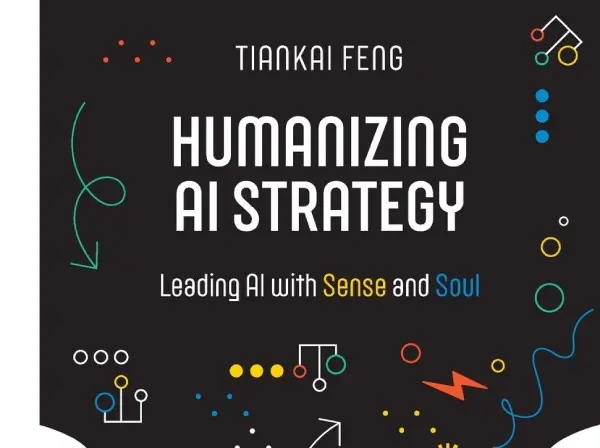
In the first entry in this series, just over a year ago, we took a look at Tiankai Feng’s first book, “Humanizing Data Strategy: Leading Data with the Head and the Heart,” it seems only fitting to now take a look at Feng’s latest entry, “Humanizing AI Strategy: Leading AI with Sense and Soul.”
In Feng’s first book, he introduced us to the 5C framework: competence, collaboration, communication, creativity, and conscience. In his second book, he applies the 5C framework to AI strategy and implementation. This gives the reader a strong foundation of how to manage AI at their organization in a human-centric way that is clear and practical, just as the first book did with data strategy. For readers who haven’t taken in Feng’s first title, he gives a detailed description of the 5C framework and takes the reader through each section, as a chapter is dedicated to each.
In the competence section of the book, Feng describes the need for AI literacy, hammering in the perspective that one must understand AI such that one knows when they can trust the output or need to question it. Going a step further, Feng asserts that to guarantee the ethical implementation of AI tools, be they GPT-style chatbots or complex learning models, one must be literate in AI tools. As a core concept, this was a challenge, as it doesn’t follow that ethics requires literacy in other facets of human existence. That said, to guarantee the ethical implementation of these tools, literacy is definitely a requirement. As a reminder to readers, one of the early events of AI being in the news was facial recognition software not being trained on a data set that included people of color, leading to a result where the solution worked only for Caucasians. This becomes a perfect real-life example of Feng’s point. Had the developers of this solution understood the nature of their algorithm and how it was trained, they would have corrected for bias in their training data set and avoided an unethical solution.
The chapter on communication stands out as one of critical importance. Feng spends significant ink on describing how a lack of communication can lead to misunderstanding of what AI can do, or create a veil of mistrust around the results of AI tools, which will manifest itself as a lack of adoption at an organization. Feng gives the reader excellent advice here, spending time on the value framing of AI. The book highlights, “The best framing connects the dots between business outcomes and human experiences.” Feng further elucidates with:
“Don’t just say ‘AI will take your job.’ That rings hollow. Say instead: ‘We’re using AI to reduce repetitive work so you can focus on the parts of your job that require judgment, creativity, or empathy.’ Then back it up with real examples and visible changes.”
This section provides the reader with the ability to give meaningful context to AI for folks within an organization, expressed with Feng’s brilliant way of connecting the human condition with AI strategy.
In summary, whether your organization is just embarking on its AI journey or grappling with extracting real value from existing AI initiatives, “Humanizing AI Strategy” offers practical, human-centric guidance that is both timely and relevant. Drawing on his insightful 5C framework, Feng equips readers with the tools to foster AI literacy, encourage meaningful communication, and frame AI’s impact in ways that resonate with people. The book’s emphasis on ethical implementation and its advice to connect business outcomes with human experiences make it an indispensable resource. Feng’s signature blend of clarity, empathy, and actionable advice ensures that leaders and teams alike can approach AI challenges with confidence and heart. If you’re seeking to make AI less intimidating and more meaningful for your organization, this book is a must-read.
About Tiankai Feng

Tiankai Feng is a data and AI leader by day, a musician by night, and an optimist at heart. His experiences span marketing analytics, business performance management, data product ownership, capability leadership, data governance, data strategy, and AI transformation. Working at TD Reply, adidas, and Thoughtworks allowed him to experience data and AI challenges from both consultant and client perspectives, helping him identify patterns in what works and what spectacularly doesn’t. Author of Humanizing Data Strategy, TEDx speaker, and frequent keynote presenter, Tiankai strongly believes in keeping humans at the center of our AI future. He often uses humor, music, and perfectly timed memes to make AI less intimidating and more approachable – because if we’re going to work with machines that sound human, we might as well have some fun with it.