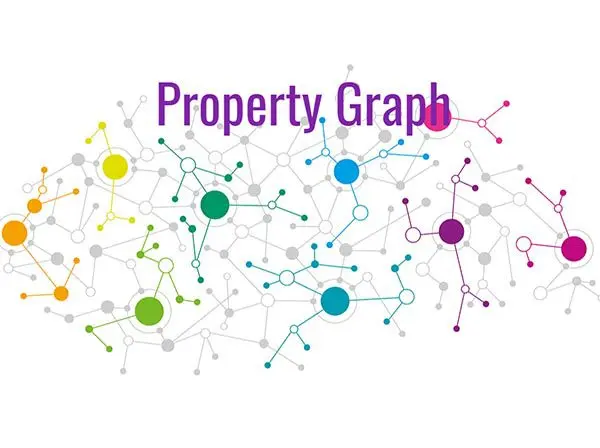
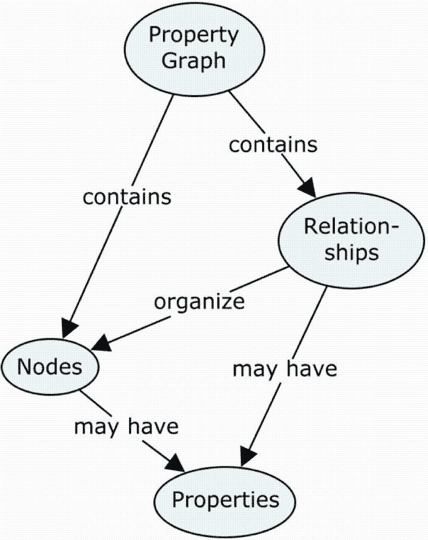
A property graph is a type of graph model where relationships not only are connections but also carry a name (type) and some properties. A property graph excels at showing connections among data scattered across diverse Data Architectures and data schemas. They provide a richer view on how data can be modeled over many different databases as well as how different kinds of metadata relate. Property graphs also show data dependencies not seen in a relational database schema or through other tools.
The International Standards Organization (ISO) is developing Property Graph Language (GQL) for querying property graphs created by different organizations.
[dv-promo buttontext=’REGISTER FOR OUR GRAPH DATA MODELING COURSES’ buttonurl=’https://training.dataversity.net/learning-paths/mdg0-modeling-data-as-graphs-learning-plan?utm_source=dataversity&utm_medium=inline_ad&utm_campaign=MDG_LP_temp2&utm_content=copy1′]
Other Definitions of Property Graphs Include:
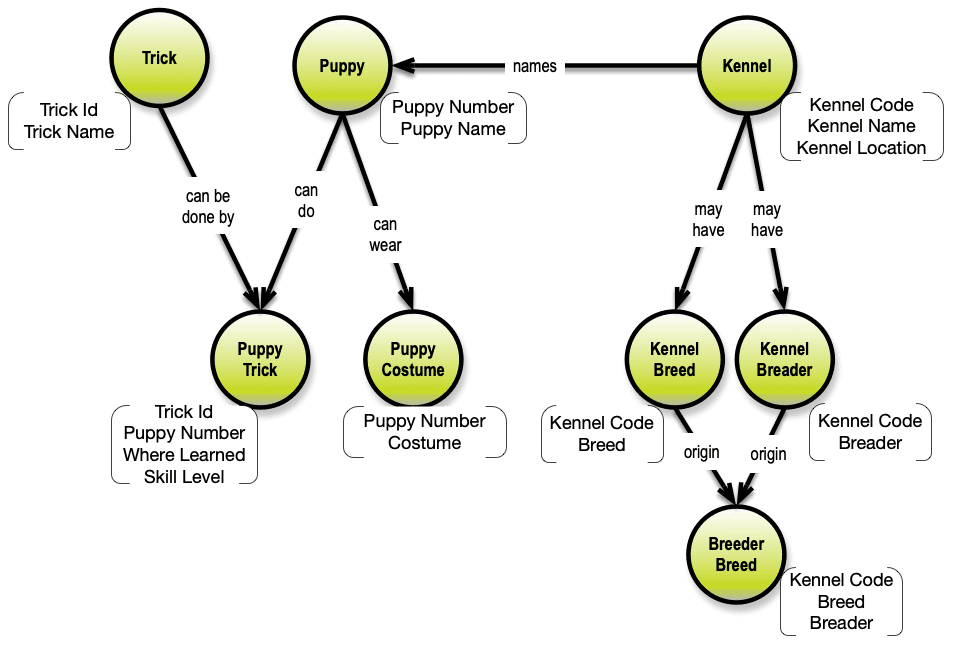
- “An extension of the directed graph paradigm with the concept of properties located on nodes, and also potentially on relationships.”(Thomas Frisendal)
- “A logical model that is not a Resource Description Framework (RDF) but has nodes and properties that connect nodes and also store attributes (scalar values).” (Forbes)
- A graph model “consisting of entities, often called nodes, and links between them, often called relationships. Nodes and relationships can also contain properties and attributes.” (Open Data Science (ODSC) Team)
- A “form of a graph that some popular tools use to manage graph data.” (Big Data Quarterly (BDQ)
- A graph like a semantic graph but it differs in that it “treats the edge as something unique based upon the surrounding nodes.” (Forbes)
- A graph that allows “properties (key/value pairs) to be associated with both nodes and links in directed graphs.” (W3C)
Property Graph Use Cases Include:
- Standardizing health vocabularies and taxonomies to code medical bills consistently.
- Tracking networks of people and the connections between them on Facebook.
- Developing an electronic content management system (ECM) system “that would allow for fast querying and fast traversals across connected data.”
Businesses Use Property Graphs to:
- Model business-level requirements.
- Improve “storage and querying.”
- Understand better how customers are connected with their products.
Image used under license from Shutterstock.com